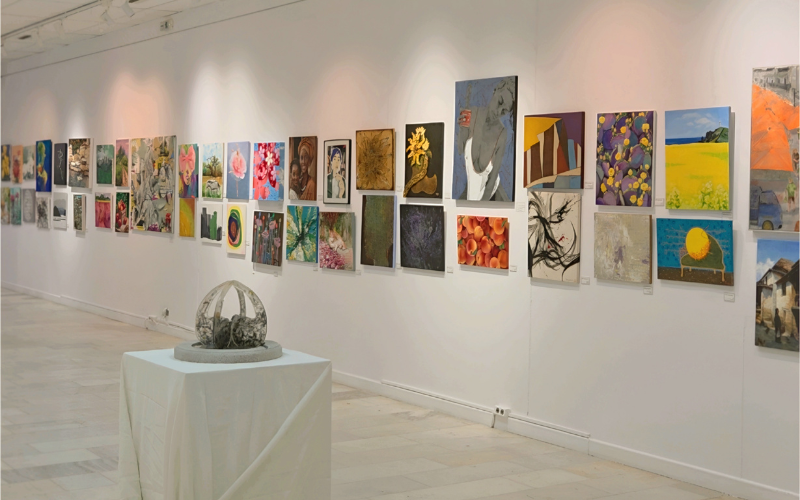
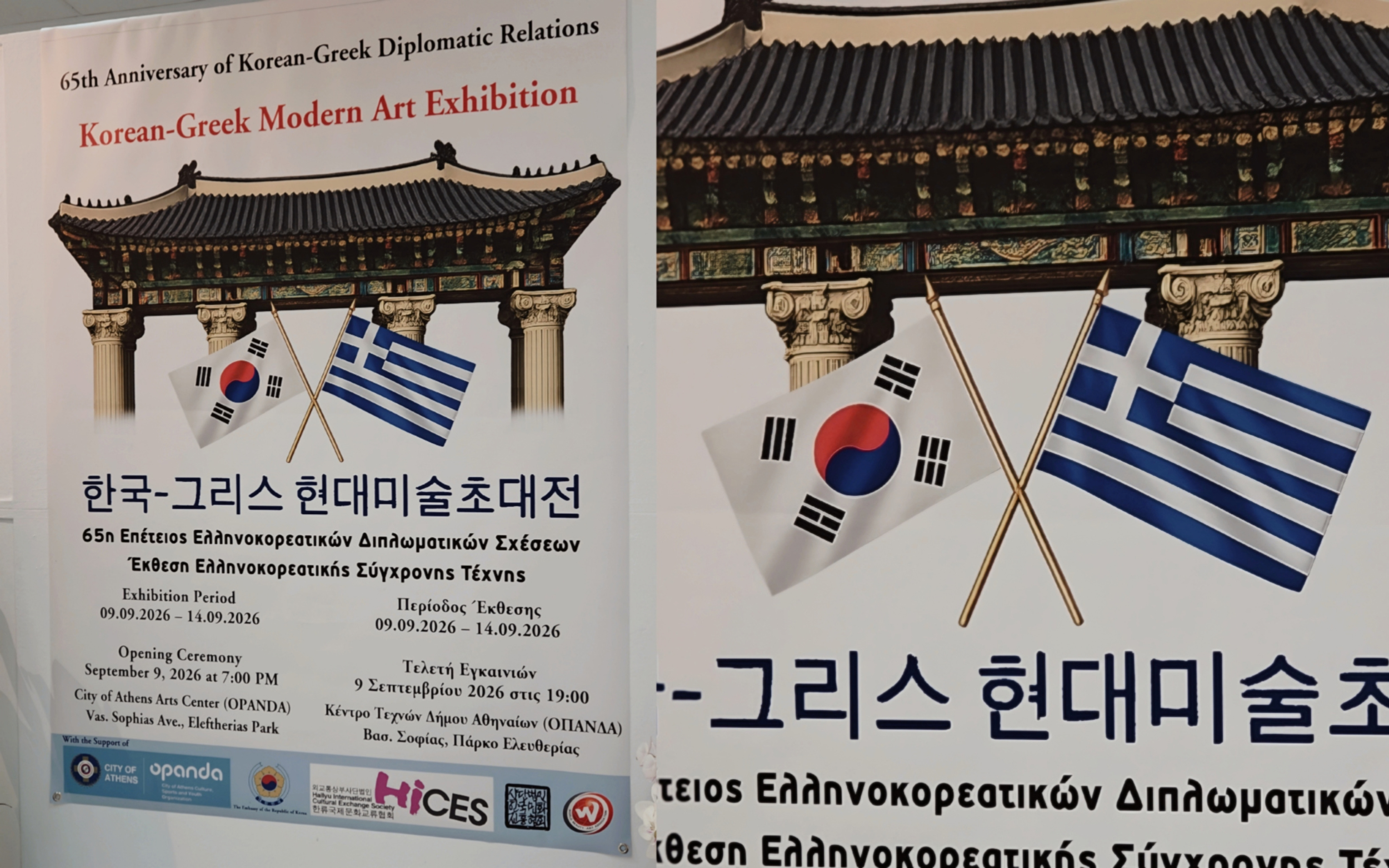
The “65th Anniversary of Korean-Greek Diplomatic Relations: Korean-Greek Modern Art Exhibition” was held from September 9-14 at the City of Athens Arts Center, Athens, Greece, commemorating 65 years of diplomatic relations between Korea and Greece. Organized by the City of Athens Culture, Sports and Youth Organization (OPANDA), the Hallyu International Cultural Exchange Society (HICES) and the Embassy of the Republic of Korea, the exhibition brought together 194 works by Korean and Greek contemporary artists, creating a visual dialogue between the two cultures.
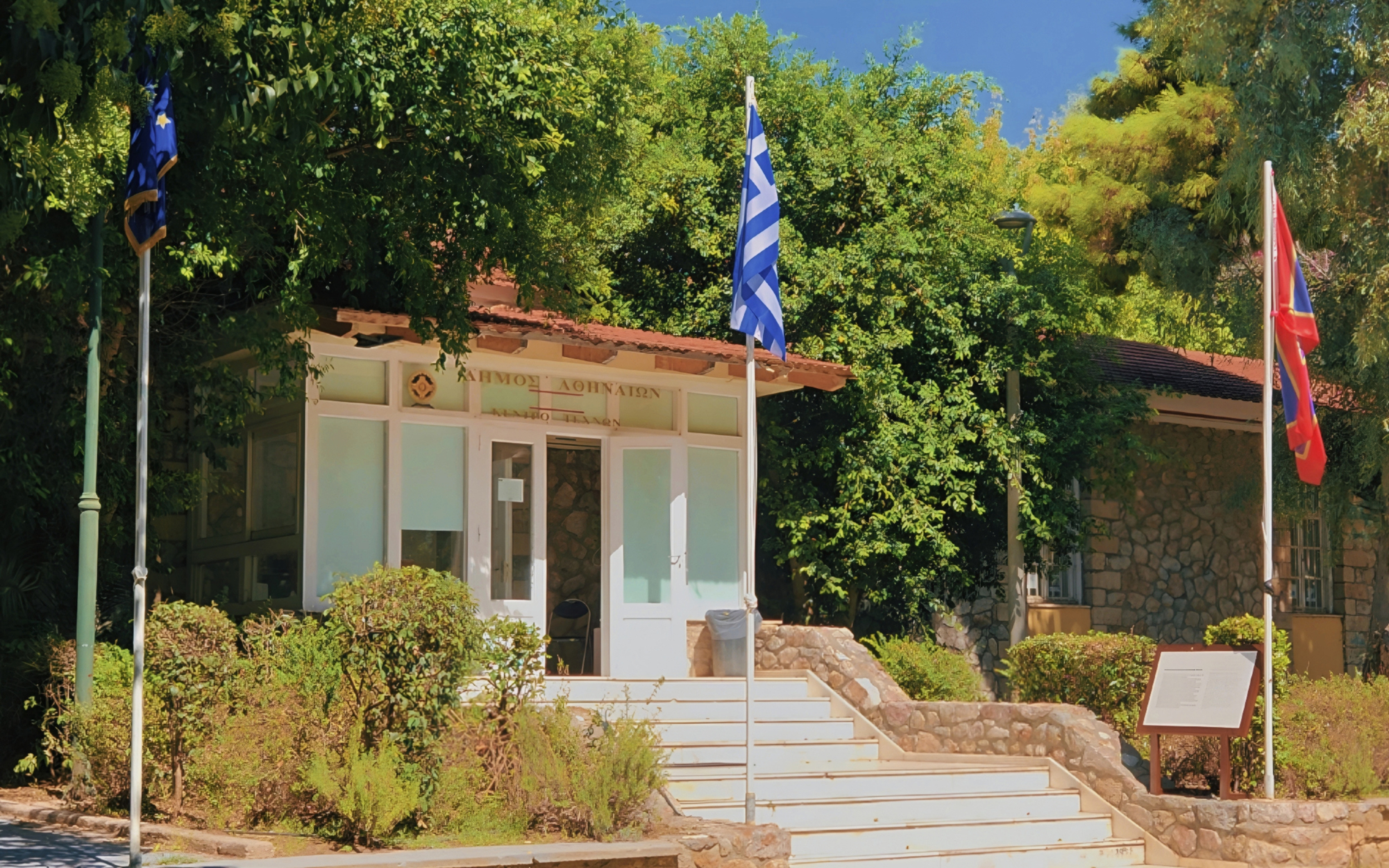
The location itself added great value to the exhibition. The City of Athens Arts Center is located in a building with a complex history. The center forms part of a former military barracks complex and was associated with the Greek military police during the military dictatorship of 1967-1974. It was used to detain and question pro-democracy activists and political dissidents, during a period of widespread persecution and torture. Today the space has been transformed into a public venue for contemporary art and cultural expression. It was in this historically charged setting that Korean and Greek artists came together to communicate through their work.
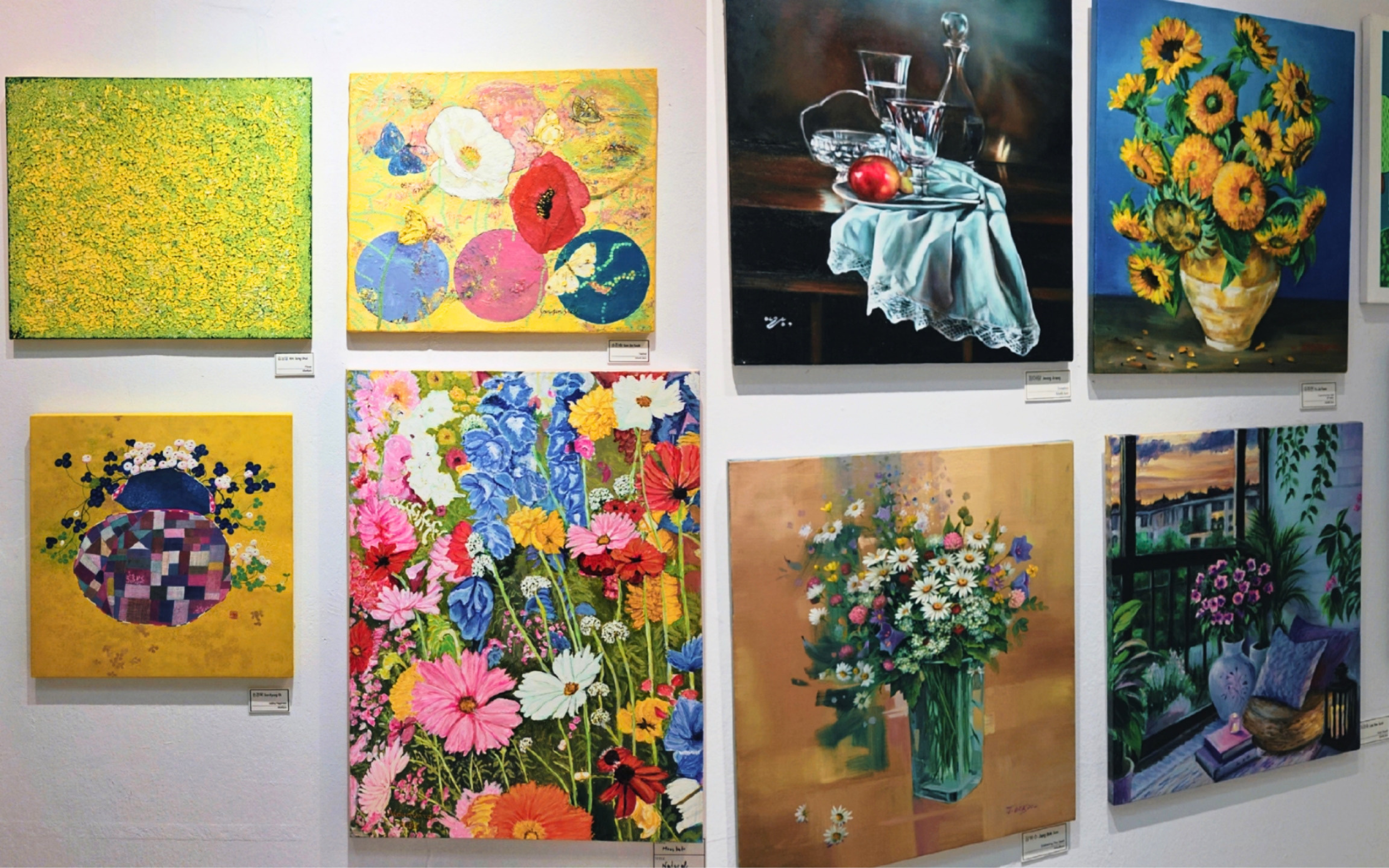
Upon entering the exhibition, one of the first things that stood out among the Korean works was the abundance of flowers and landscapes. Flowers appeared in vivid colors and in a variety of artistic forms, often becoming the central subject of the composition. In Korean culture, flowers have long carried symbolic meanings and have been connected with ideas of nature and spirituality. Among them was the mugunghwa (무궁화), Korea’s national flower. Its name is often associated with the idea of something that continues to bloom, making it an enduring symbol within Korean cultural identity.
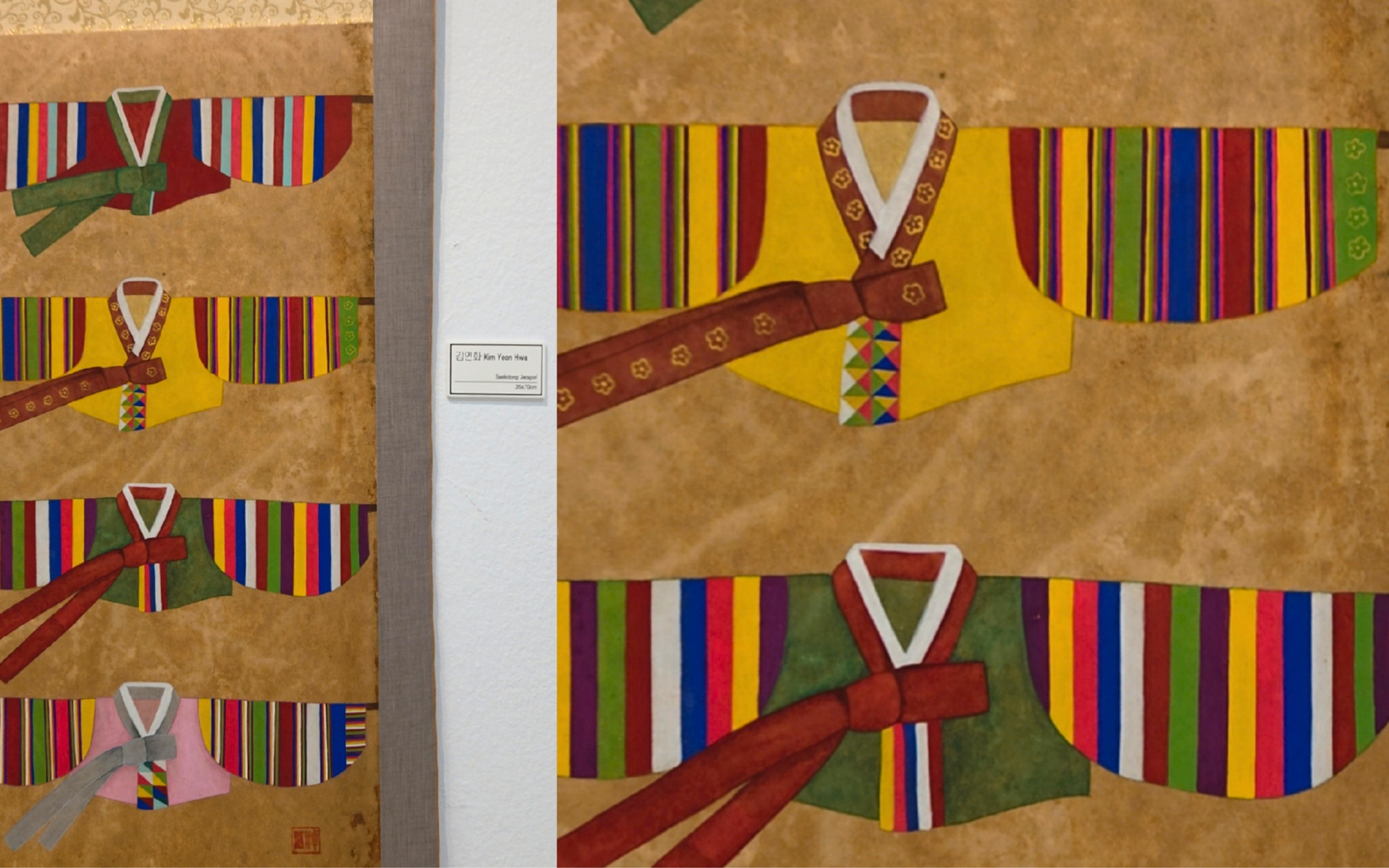
Other works incorporated colorful visual traditions associated with Korea. One of them was saekdong (색동), the multicolored striped pattern traditionally associated with hanbok. Its vivid colors are associated with obangsaek (오방색), the five traditional colors of Korean cosmology: red, blue, yellow, white and black. In contemporary art, these traditional visual elements can take on new meanings. They no longer belong exclusively to traditional clothing or objects; they can become part of a modern artist’s visual vocabulary.
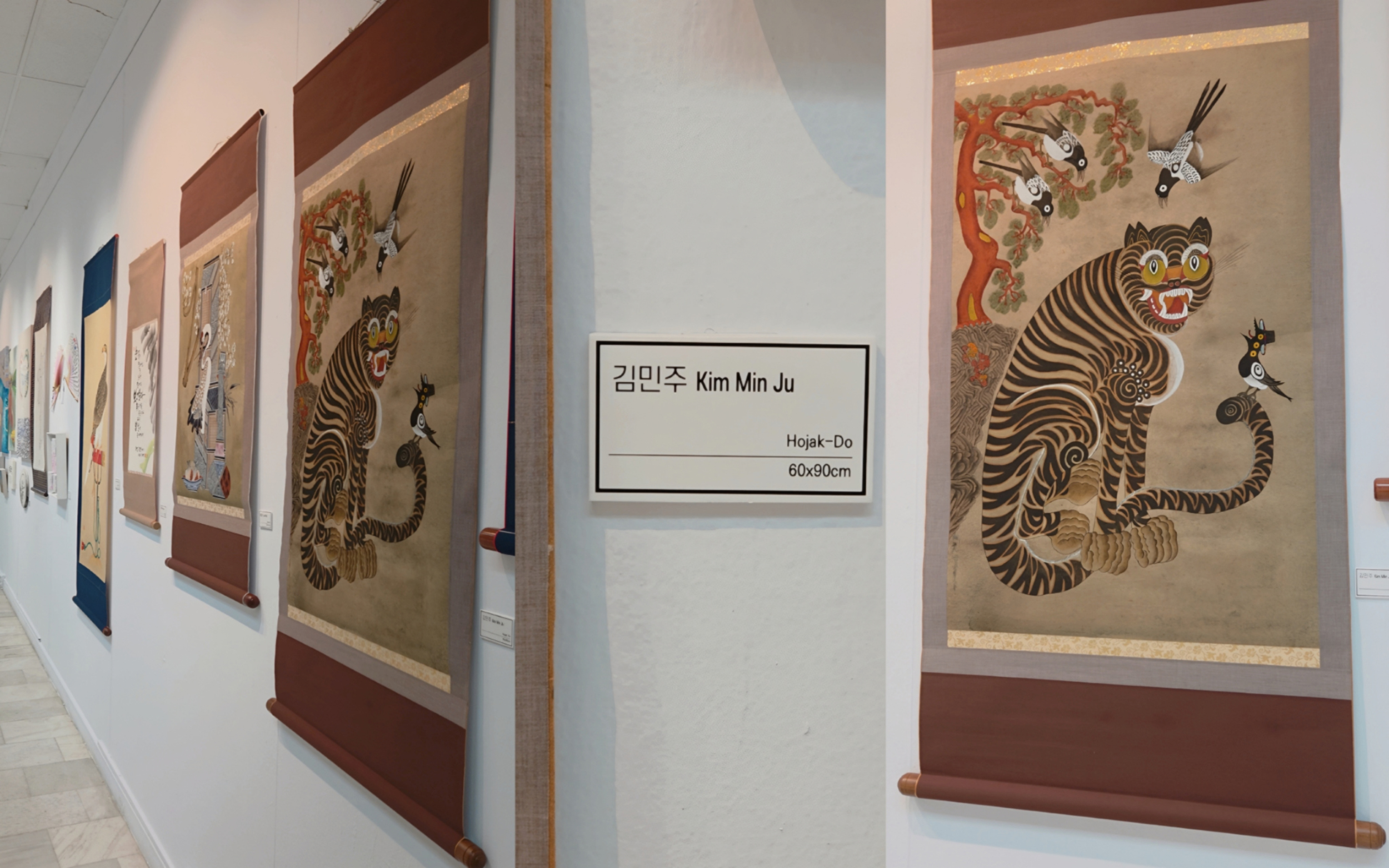
The exhibition also offered an introduction to minhwa (민화), Korean folk painting. Among the most recognizable motifs were tigers, magpies and pine trees. This combination is known as hojakdo (호작도), a traditional Korean painting subject that became especially popular during the Joseon period.
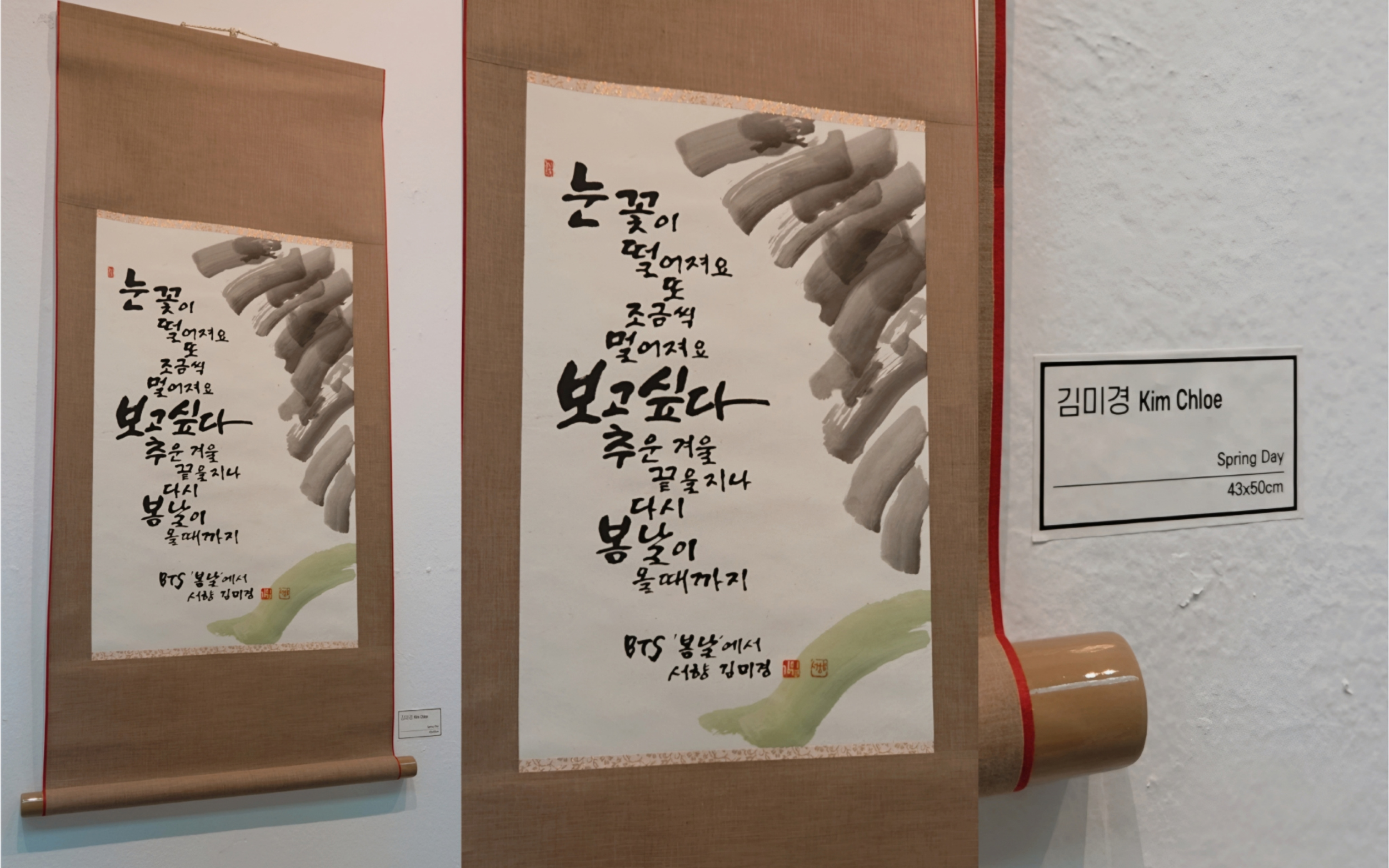
Among the traditional Korean poems on display, one unexpected piece incorporated lyrics from BTS’s “Spring Day” (봄날). The song was released in 2017 and it is widely associated with themes of longing, separation, and the hope that difficult times will eventually pass. Its central image of winter giving way to spring has made it one of BTS’s most enduring songs. Seeing its words within an art exhibition created an interesting bridge between different generations and forms of Korean culture. Korean culture was not presented as something frozen in the past. The exhibition allowed visitors to move from traditional heritage to contemporary Korean life and global K-pop culture within the same space.
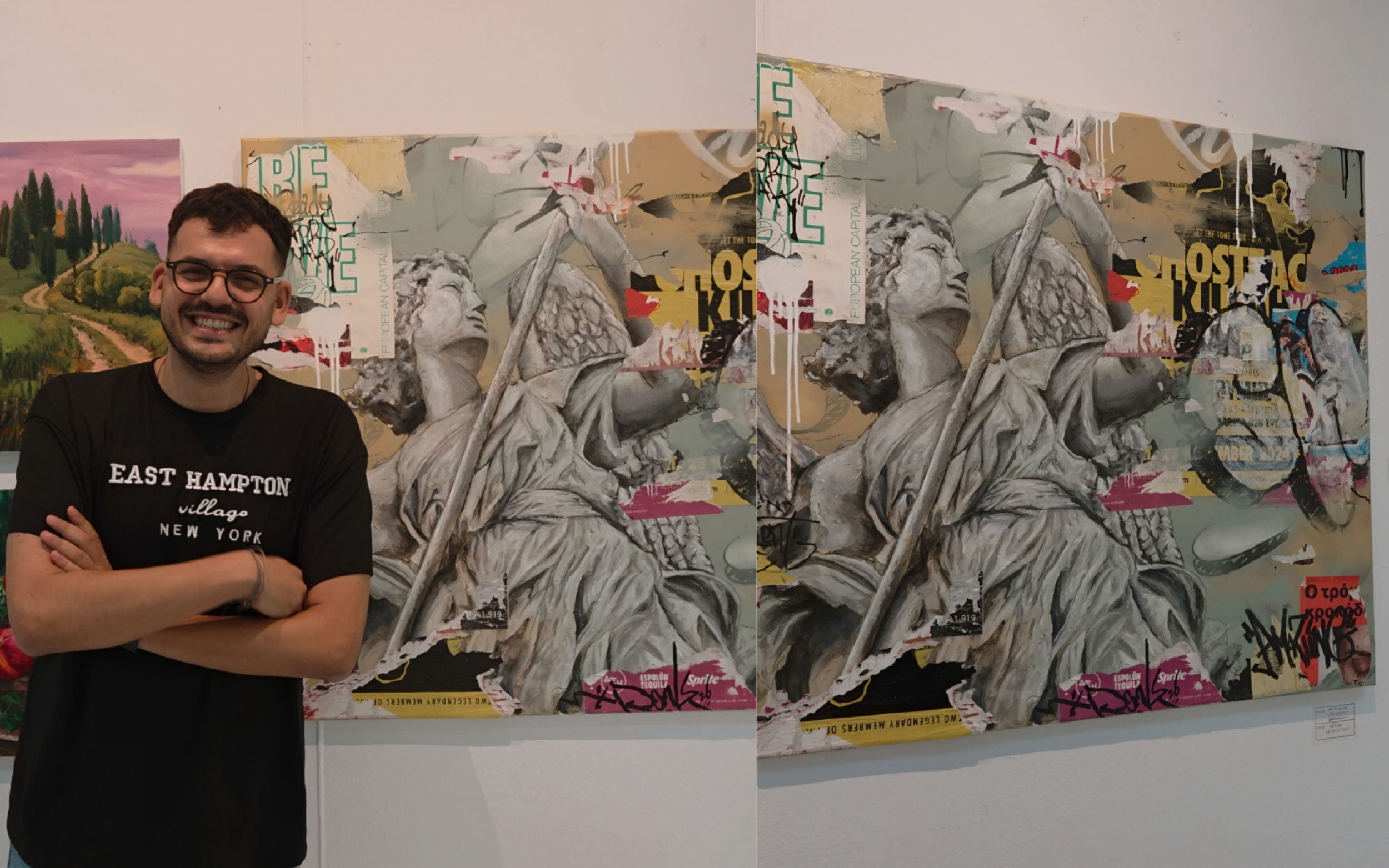
A similar dialogue between past and present appeared in the work of Greek artist Antonis Cheiladakis. His piece featured an ancient Greek sculptural figure surrounded by contemporary, collage-like visual elements. The combination brought an image from ancient Greek heritage into dialogue with the visual language of the present. Meeting the artist behind the work added another dimension to the experience. As a self-taught artist, Antonis offered his own perspective on connecting Greece’s ancient cultural heritage with contemporary artistic expression.
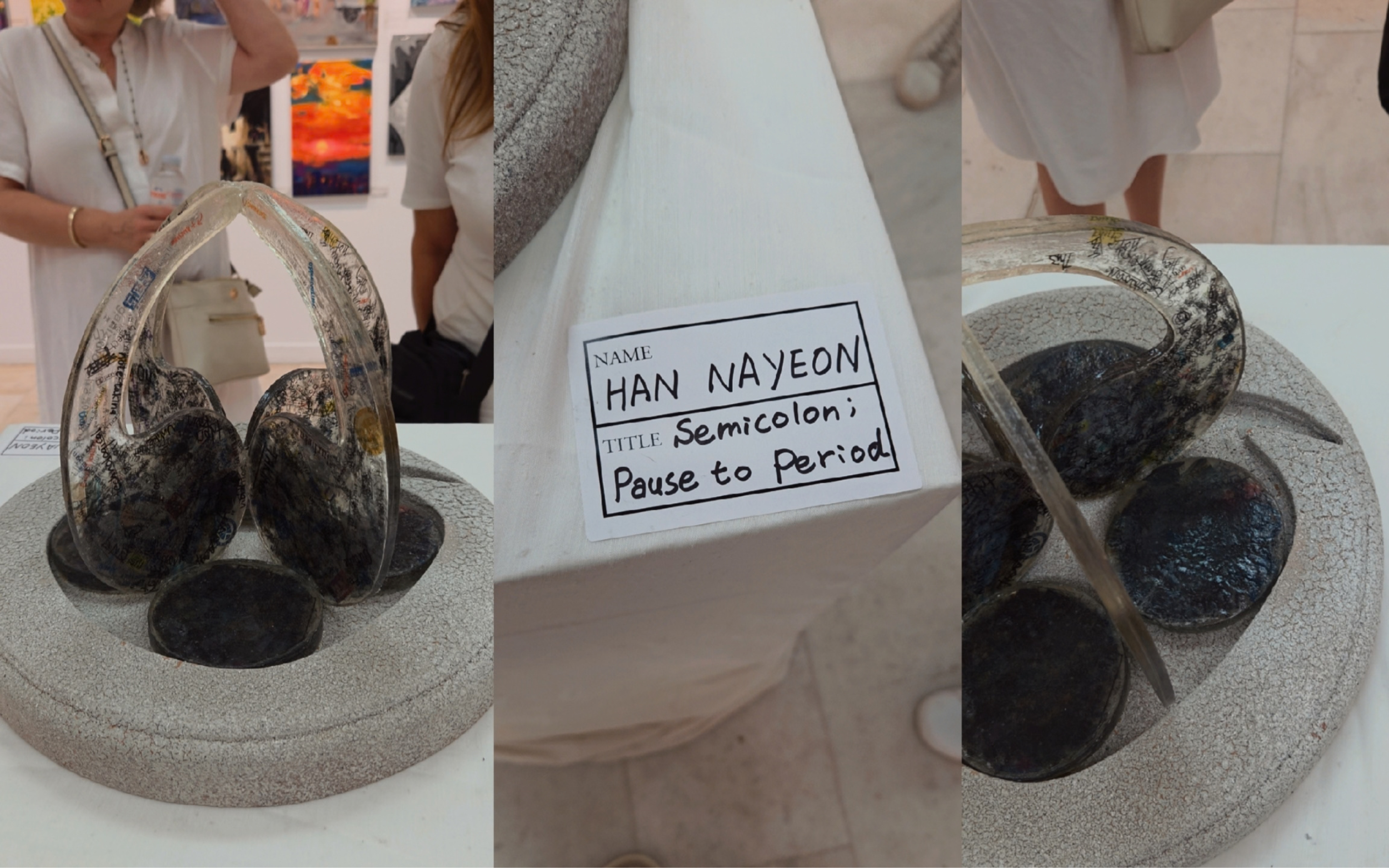
At the center of the exhibition, one particularly striking installation was titled “Semicolon; Pause to Period”. The work featured four upright semicolons, arranged within a frame resembling a thought bubble. Its playful design immediately caught the eye, while its title invited reflection on pause and conclusion, continuation and finality.
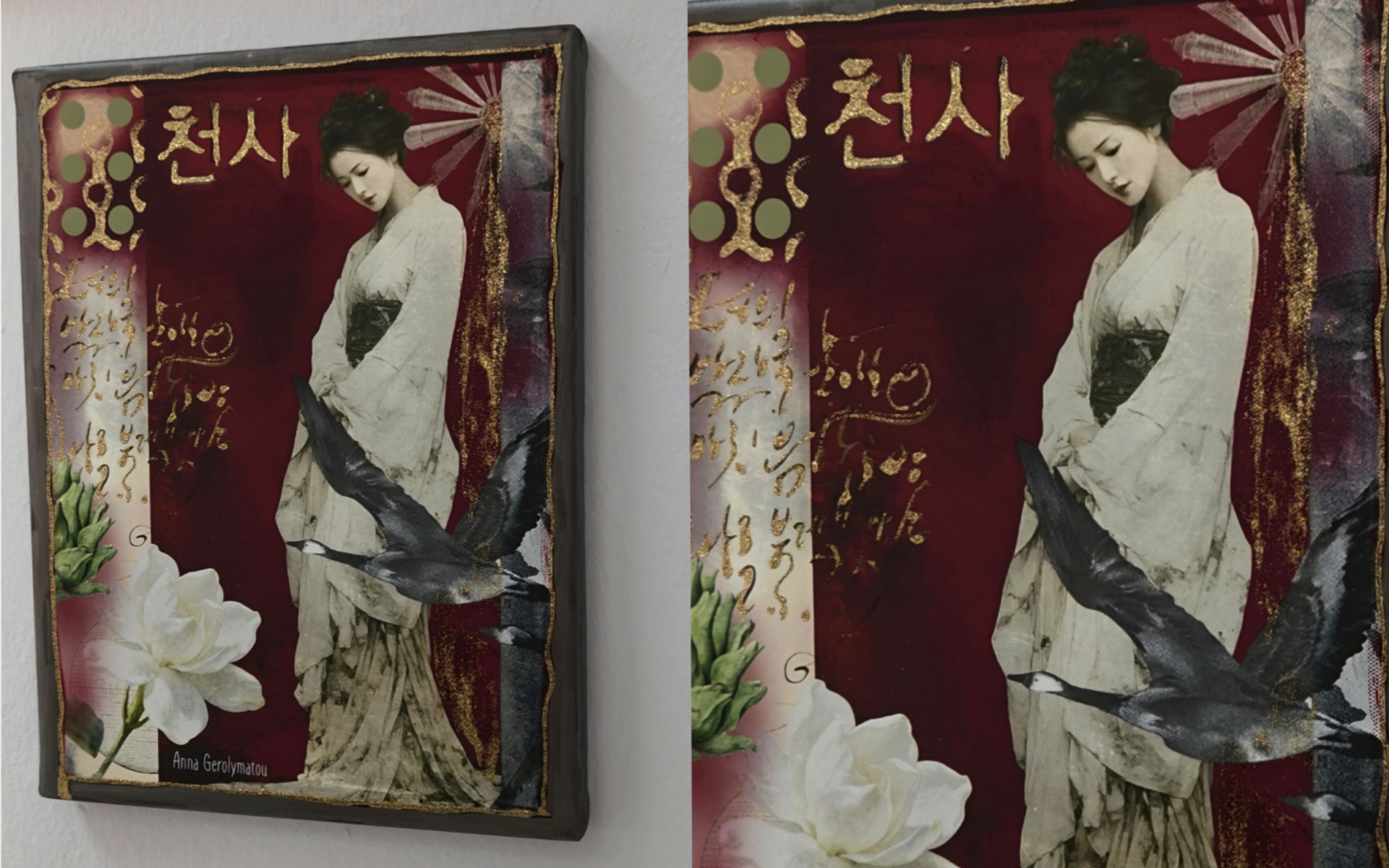
The cultural exchange also moved in the opposite direction. Some Greek artists created works depicting Korean figures and imagery, showing that Korean culture had also entered the artistic vocabulary of Greek creators.
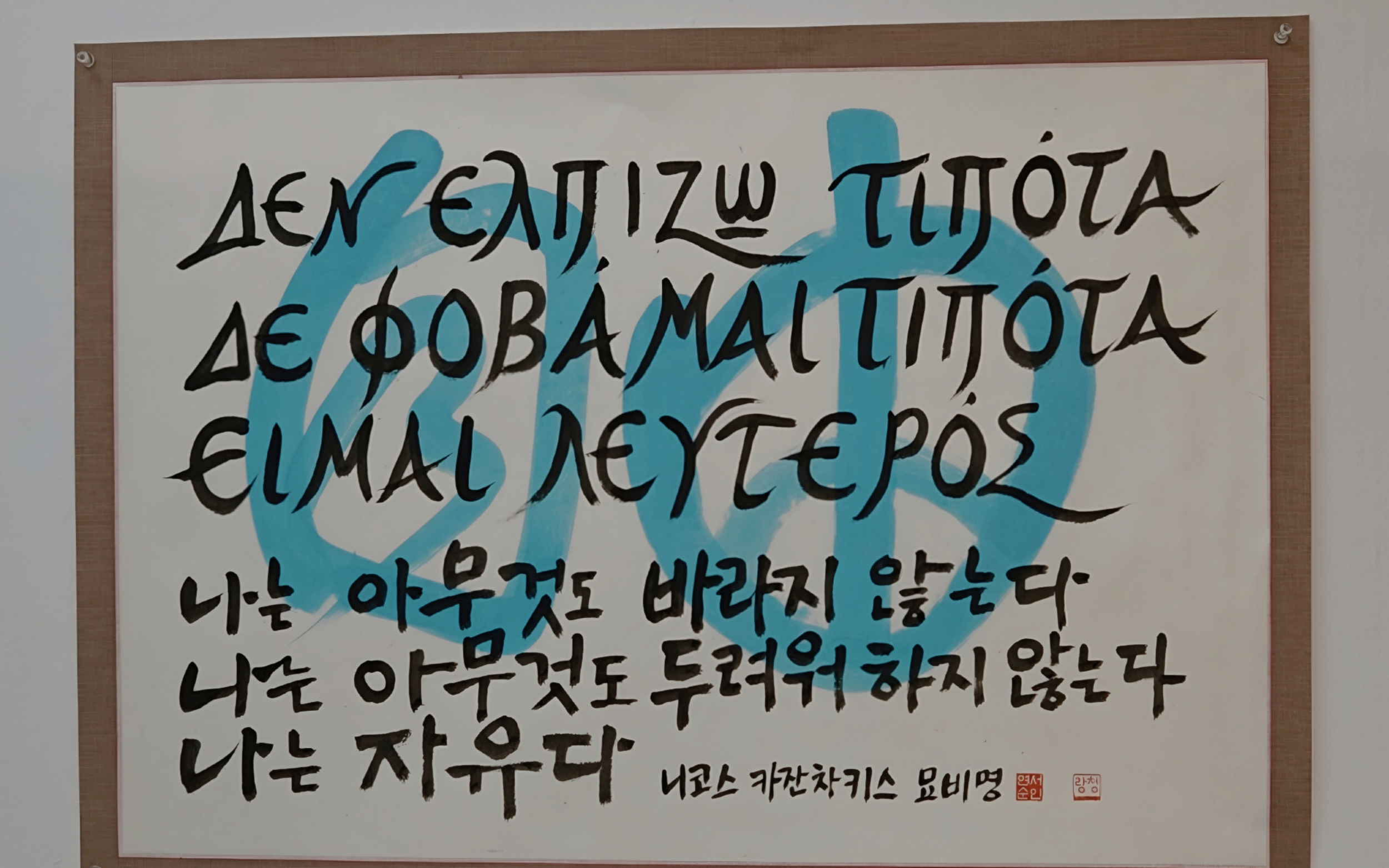
Perhaps, one of the clearest examples of the exhibition’s cultural dialogue was a Korean artwork featuring the words: “I hope for nothing. I fear nothing. I am free.”. The phrase appeared in both Greek and Korean and was identified as the epitaph of Nikos Kazantzakis, a prominent Greek writer and thinker. Seeing these words presented by a Korean artist was particularly meaningful. A phrase originating from one of Greece’s most internationally recognized literary figures had crossed a linguistic and geographical boundary and entered a Korean artistic context. It was perhaps the simplest expression of what the entire exhibition was attempting to achieve: not merely showing one culture to another, but allowing one culture to reinterpret the other.
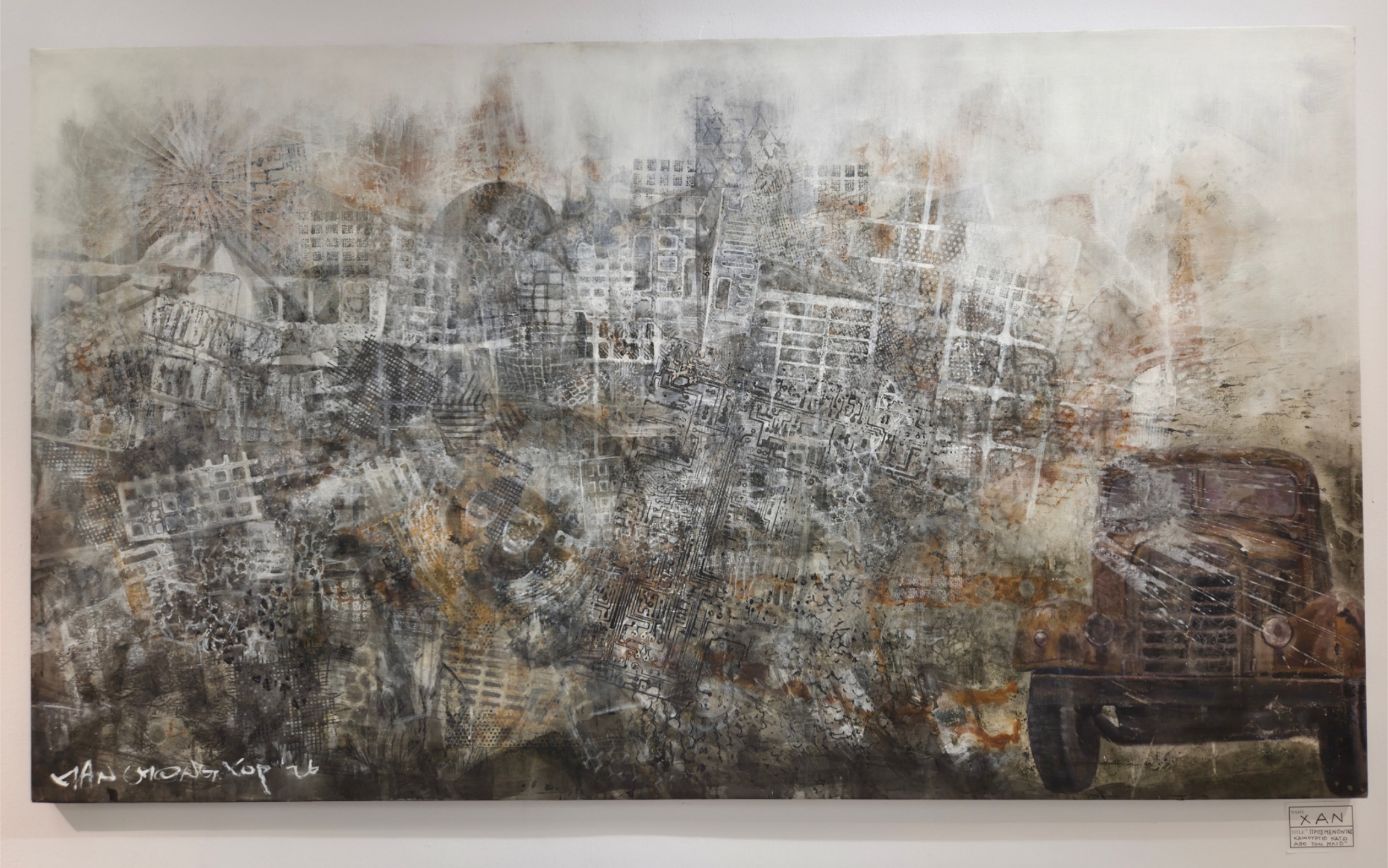
Another memorable encounter came through a conversation with Korean artist Mr. Han, who has lived in Greece for many years. He explained the idea behind his work, “Awaiting the New Under the Sun”. The artwork presents a fragmented landscape with an abandoned old car in the right corner. For Mr. Han, the car represents something that has already served its purpose. Objects remain after people are gone, but eventually they too deteriorate, lose their function and disappear. This reminds Korea’s experience of rapid industrialization and the rise of heavy industry. The country underwent enormous socioeconomic transformation within a relatively short period, making the cycle of production, use, obsolescence and transformation especially relevant. The old car therefore becomes more than an abandoned object. It becomes part of a meditation on impermanence – and on the possibility that the disappearance of the old can make room for something new.
Other works featured hanbok, traditional Korean objects, Korean phrases and proverbs, while others explored contemporary social issues, urban environments, animals and nature. Together, they presented Korea through multiple perspectives: traditional and modern, local and global, historical and contemporary.

